Signal Smarts

WORKFORCE HOUSING & REMOTE SITES

Full low-voltage technology infrastructure for modular workforce villages, man camps, and remote operations campuses — where schedules are tight, conditions are rough, and every system has to work from day one through final turnover.

FiberWi-FiAccess ControlCCTVTV SystemsTemporary & Permanent Connectivity
Technology infrastructure

THE FULL TECHNOLOGY LAYER — NOT JUST CONNECTIVITY

Workforce housing campuses are small cities. They need more than cable installation — they require a coordinated technology plan built around the realities of the site.

Signal Smarts provides end-to-end low-voltage and technology infrastructure services for these environments — from early planning and pathway coordination through installation, configuration, testing, commissioning, and ongoing field support.
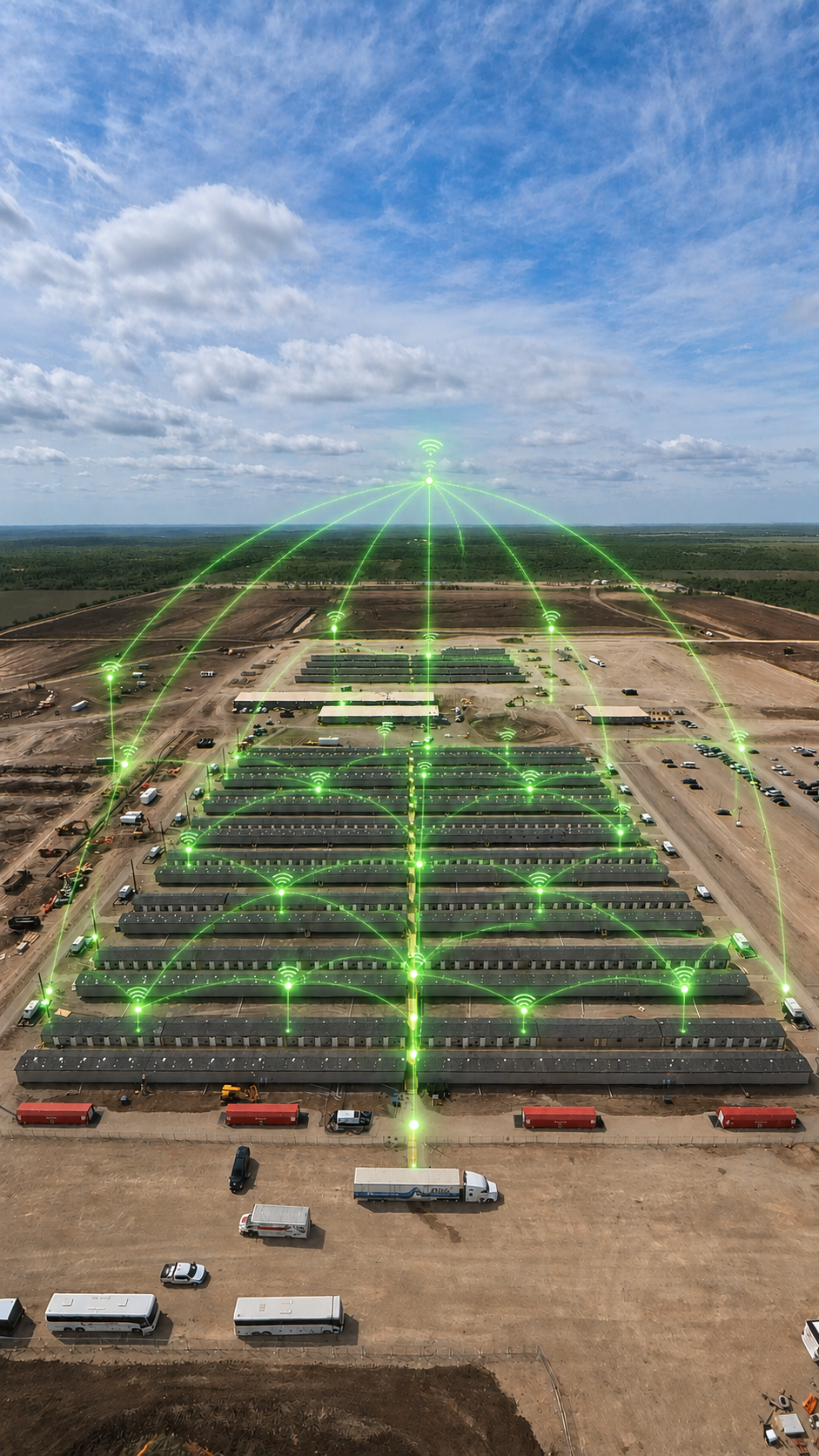
Connected remote workforce housing campWorkforce Camp // Connected
ConnectivityPower dependenciesAccess routesNetwork designUser demandSecurity coverageDevice placementOngoing support
Capabilities

ONE COORDINATED PLAN

Internet & WAN

Redundant Uplinks

Redundant internet connectivity sized for headcount, applications, and future growth.

Wi-Fi

Managed Wi-Fi

Resident and operations Wi-Fi coverage engineered for density and clean roaming.

Backbone

Cabinets & Fiber

Network cabinets, structured cabling, and fiber backbone built to scale with the site.

Access

Access Control

Card readers, door controllers, and gate access unified into a single system.

Cameras

Cameras & CCTV

Camera coverage, NVR/VMS, and storage sized for the full site perimeter.

Entertainment

TV Systems

Room TV, coax, and IPTV infrastructure for housing units and common areas.

Gates

Gate Communications

Intercom and gate communication systems for controlled entry points.

Common Areas

Common-Area Connectivity

Dining halls, gyms, and gathering spaces wired and covered like the rest of the site.

Support

Incident Response

Field support and troubleshooting to keep critical systems running after turn-up.

Field execution

BUILT FOR FAST-MOVING, INFRASTRUCTURE-CONSTRAINED SITES

We know that successful technology deployment depends on more than drawings. It requires crews who can work in changing field conditions, coordinate with civil, electrical, modular, and operations teams, and keep critical systems running while construction continues. Every installation is documented so the next crew knows exactly what was built.

Process

SITE PLAN TO HANDOFF

[ 07 STEPS ]

Signal Smarts works across the full technology lifecycle — planning, pathways, procurement, installation, configuration, testing, commissioning, and ongoing support. Here is how a typical workforce housing engagement runs:

  1. Share site plans, laydown maps, or satellite captures along with expected headcount, application requirements (VoIP, CCTV, timekeeping, resident Wi-Fi, gate access), and schedule constraints.

  2. We review scope, confirm power dependencies, pathway routes, and access conditions — then engage early to identify readiness gaps before field work begins.

  3. You receive a coordinated technology plan: network design, device placement, backhaul options, access control layout, camera coverage, and a detailed scope of work.

  4. After sign-off we procure, configure, and lab-test equipment — labeled by building or row ID to keep field teams moving efficiently.

  5. Install crews coordinate with civil, electrical, modular, and operations teams. We can deploy in phases — pad by pad or building by building — as the site is ready.

  6. Every device is adopted, named, programmed, and tested. Commissioning includes as-built drawings, admin credentials, and escalation contacts for operations and IT.

  7. Signal Smarts remains available for troubleshooting, device management, network support, and incident response after turn-up.

BUILD A
CONNECTED SITE

Tell us about your project — site type, headcount, schedule, and what connected, secure, and operational looks like for your operation. We will respond with a plan.